


AI-generated presenters and virtual influencers are production formats, not a marketing strategy on their own. They may be used in explainers, campaign assets, or product content when they fit the audience and the task.
Start with a defined use
Choose what the asset should explain, who will see it, and where it will appear. A short product explainer, a recurring campaign character, and an interactive site guide require different scripts, review steps, and production effort.
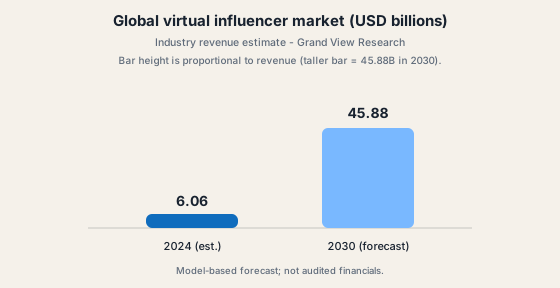
Market estimates describe a category; they do not predict results for an individual business.
Plan rights, identity, and review
Before production, document who owns the character and assets, whether a real person’s likeness or voice is involved, how each asset may be used, and who approves scripts and final edits. Check applicable platform rules and disclosure requirements for the intended market.
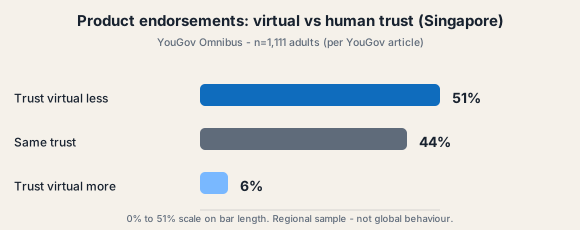
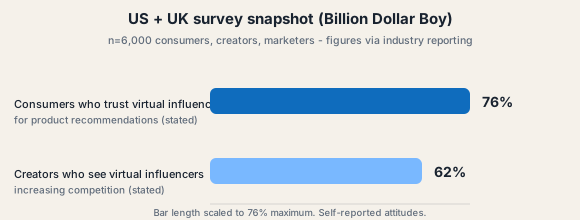
Survey results about trust or comfort describe a particular study population, question wording, and fieldwork period. They do not predict whether a specific campaign will persuade viewers.
Test one use case at a time
Compare a presenter asset with an appropriate alternative using the same audience and a defined outcome, such as video completion or engagement with the next step. Views or clicks alone do not establish revenue impact.
Keep the brand voice and offer clear
The script should match product facts, tone, and audience. The presenter should support the message rather than obscure who is speaking, what is offered, or where viewers can verify details.
Use a production plan the team can maintain
Estimate scripts, versions, languages, rights checks, review rounds, formats, and updates before scaling. If those inputs change, the schedule and effort estimate should change too.
AI-presenter content can be one option in a broader content plan. Assess it against a defined task, document rights and approvals, and test usefulness without assuming it will improve conversion.